
Portfolio
Google Tag Manager Implementation for Kapiva
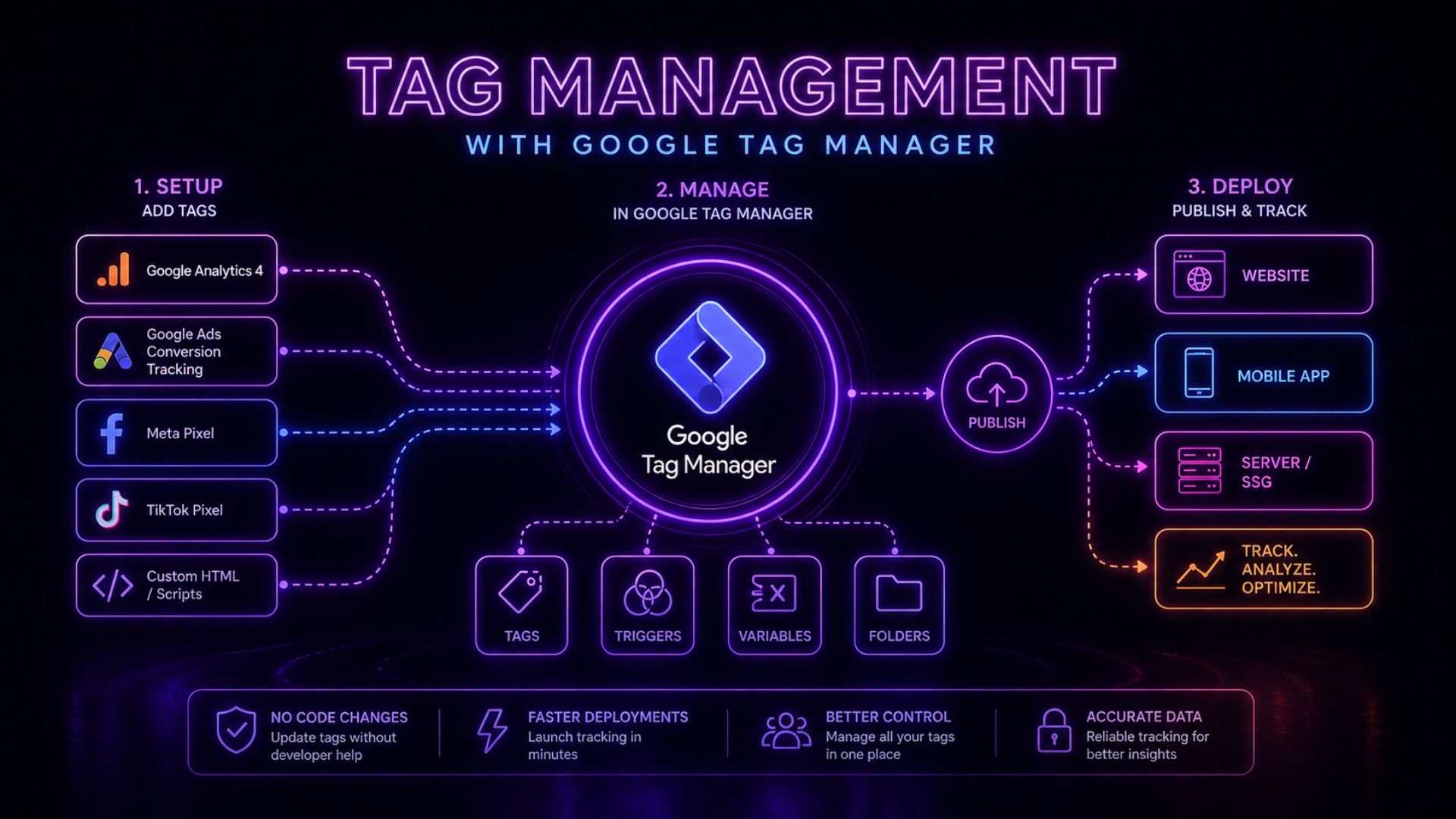
Centralized and restructured all marketing and analytics tracking into Google Tag Manager to replace fragmented pixel implementations. Built a scalable tagging system with structured triggers, variables, and event logic across platforms like Google, Meta, and affiliates. This provided full control, improved data reliability, and made ongoing tracking easier to manage and extend.
Overview
Kapiva’s marketing stack involved multiple platforms including Google Ads, Meta, Snapchat, and affiliate networks—each requiring their own tracking pixels and event configurations.
Over time, this led to fragmented implementations across the website, making it difficult to manage, debug, and scale tracking reliably.
The Challenge
- Multiple tracking pixels implemented inconsistently across the site
- Custom event logic scattered across different scripts
- Limited visibility and control over when and how tags were firing
- Difficult to debug and maintain as the system scaled
The goal was to centralize and standardize the entire tracking setup into a system that could be controlled, extended, and maintained efficiently.
Approach
Reviewed all existing pixel implementations, event logic, and platform-specific requirements across marketing channels.
Migrated all tracking pixels and scripts into Google Tag Manager, creating a single layer for managing all marketing and analytics tags.
Designed structured triggers and event logic within GTM to handle complex firing conditions across user journeys and interactions.
Implemented a system where every tag, trigger, and variable could be monitored, tested, and validated before deployment.
Ensured the structure could support new platforms, campaigns, and tracking requirements without introducing additional complexity.
What Was Implemented
- Centralized tag management via Google Tag Manager
- Migration of all marketing pixels (Google, Meta, Snapchat, affiliates)
- Custom trigger and event logic for user interactions
- Structured variables and parameter handling
- Debugging and validation workflows
Outcome
- Full visibility and control over all tracking events
- Improved reliability of marketing and attribution data
- Simplified management of multiple tracking platforms
- A scalable system for adding new campaigns and integrations
The result was a centralized tracking infrastructure that replaced fragmented scripts with a structured, controllable system built for scale.
Engagement
Worked closely with the marketing and engineering teams to align tracking requirements across platforms and ensure accurate implementation.
The focus was on building a system that could evolve with changing campaign and attribution needs without introducing technical overhead.